
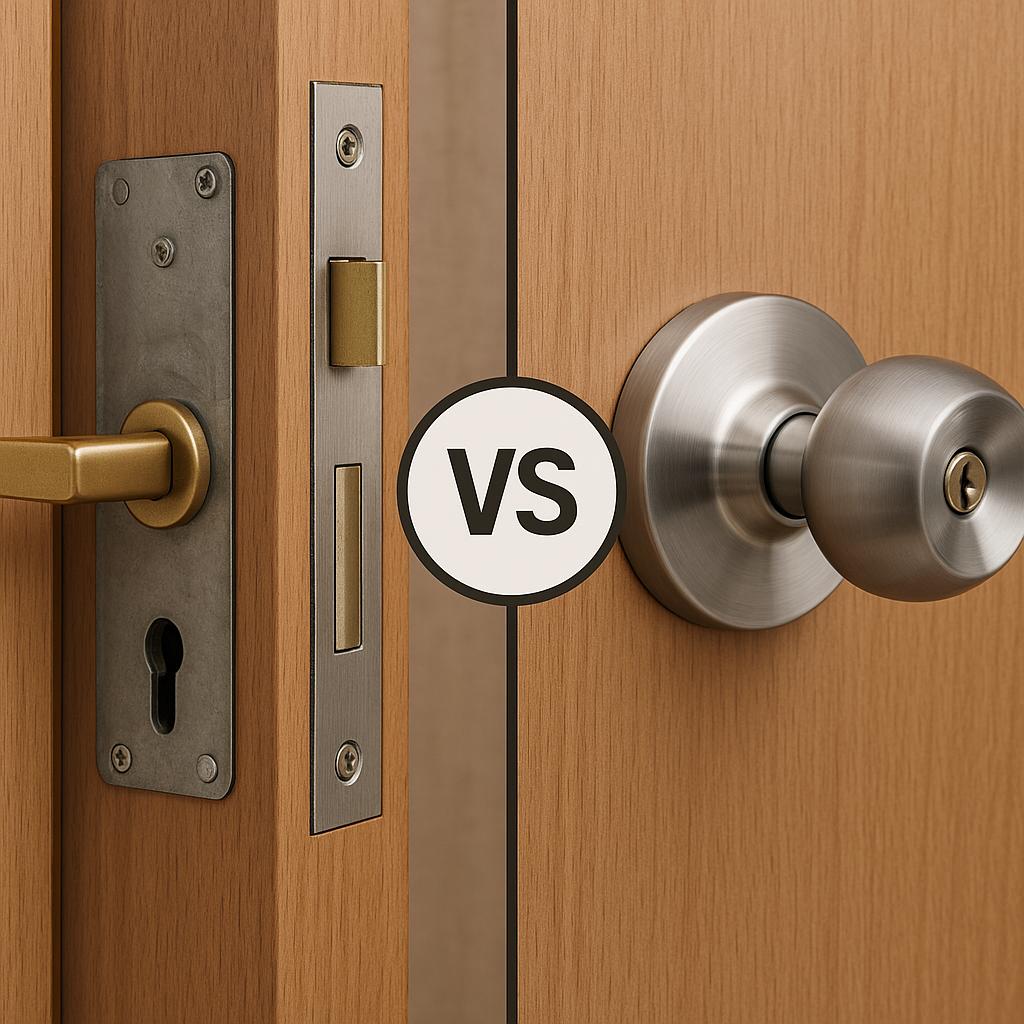
Mortise vs tubular entry sets: Which is the better choice for your custom front door? Both are popular hardware options, but they differ in how they’re installed, how they operate, and the door preparation they require. Understanding these differences can help you choose hardware that complements your door’s design while meeting your practical needs.
When designing a custom front door, the handle and locking system should be considered early in the process. The hardware you select can influence the door’s appearance, functionality, and construction. Choosing an entry set after the door has already been built may limit your options or require additional modifications.
Doors Galore Co., a family-owned custom door manufacturer based in Sarasota, Florida, offers both mortise and tubular entry sets. In this guide, we’ll compare their construction, compatibility, appearance, operation, and other important considerations to help you make an informed decision for your custom entryway.
Mortise vs Tubular Entry Sets: What’s the Difference?
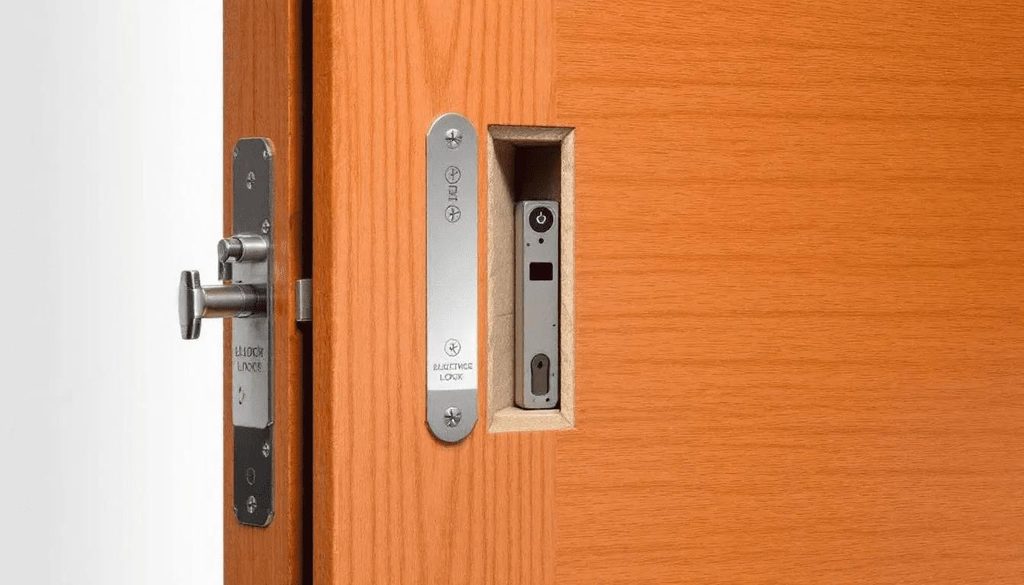
A mortise entry set uses a lock case fitted into a rectangular pocket cut into the edge of the door. The visible handle, knob, lever, or decorative plate connects to that internal mechanism. The exact locking functions depend on the model.
A tubular entry set uses components installed through bored holes in the face and edge of the door rather than a large rectangular lock pocket. A front-door arrangement may include a separate deadbolt and handle or lever assembly, depending on the product.
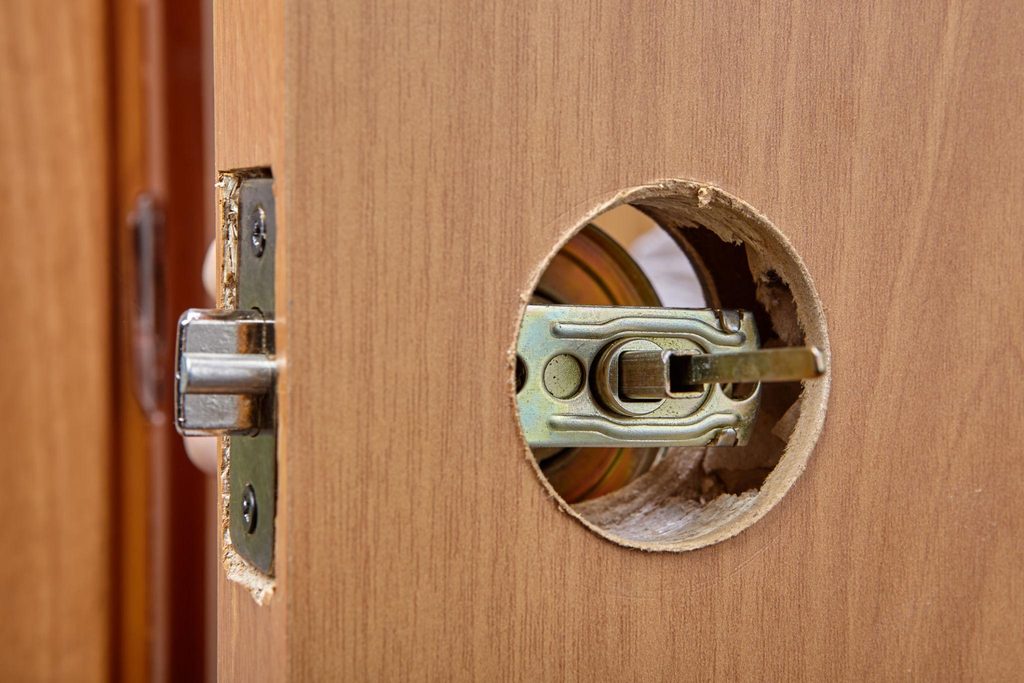
The practical distinction is the door preparation. A door prepared for one system should not be assumed to accept the other without modification. Even hardware within the same category can have different dimensions and installation requirements.
For a new custom door, coordinate the hardware choice before machining begins. For an existing door, identify its current preparation before selecting a replacement set.
Start with compatibility, not appearance
A beautiful entry set is only a useful choice if it works with the door and frame. Before committing to a model, have the following details checked against its installation specifications:
- Door thickness: Confirm that the selected set accommodates the actual thickness of the door.
- Backset: This is the distance from the door edge to the center of the relevant hardware bore or operating spindle.
- Available wood around the hardware: Glass, carving, panels, and narrow vertical sections can limit placement.
- Swing and handing: Some components must be selected or configured for the way the door opens.
- Frame and strike preparation: The locking components must align with the appropriate openings and hardware in the frame.
- Existing holes or pockets: On a replacement project, old preparation may constrain the options or require repair.
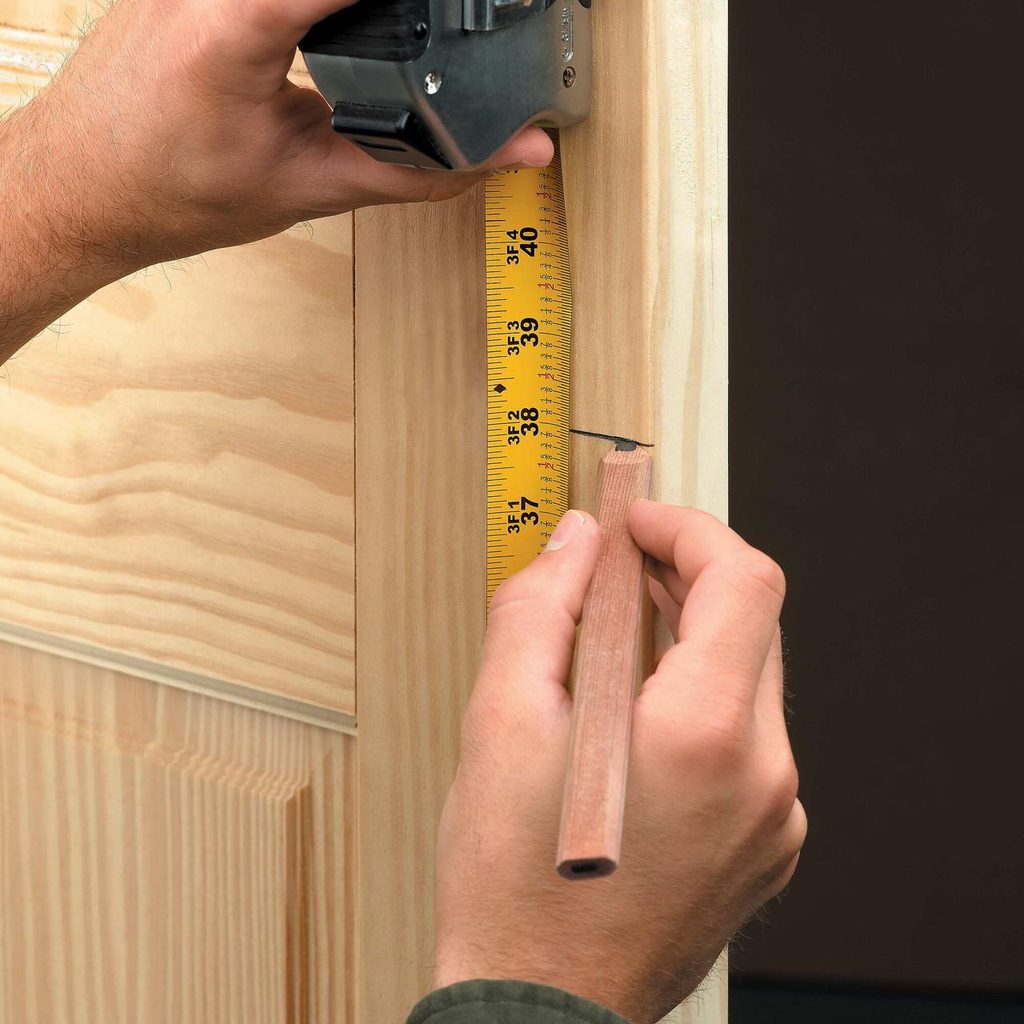
These are coordination points, not instructions to drill a finished door yourself. Product-specific templates and installation requirements should guide the work.
Doors Galore offers door installation for replacements and custom builds, making hardware fit a relevant part of the broader project discussion.
Door hardware is manufactured to specific dimensions and installation requirements, and some products are evaluated against recognized industry standards. The American National Standards Institute (ANSI) provides information about the standards system used across many industries, including building products. For installation decisions, always consult the exact hardware manufacturer’s specifications rather than assuming all entry sets use identical measurements.
Match the visible hardware to the door design
Mortise and tubular describe the mechanism and preparation—not a single decorative style. Compare actual entry sets rather than assuming that one category is always traditional and the other always contemporary.
Consider scale and placement
A long decorative plate may become a prominent feature on a simple door. On a carved wood door, the same plate may compete with the carving. A smaller profile may leave more of the wood or glass composition visible, but its mounting requirements still need to fit the design.
Review the entry set on a drawing of the whole door, including glass, panel borders, and any sidelights. Check both the exterior and interior views; the inside hardware is part of the room as well as the entry.
Coordinate finishes intentionally
Choose the hardware finish alongside the wood color, door finish, and other visible metal details. They do not all have to match, but the combination should feel deliberate.
For a Sarasota exterior entry, ask about the selected hardware finish’s suitability for the door’s exposure and its care requirements. Do not assume every finish offered within a product range has identical maintenance needs or written coverage.
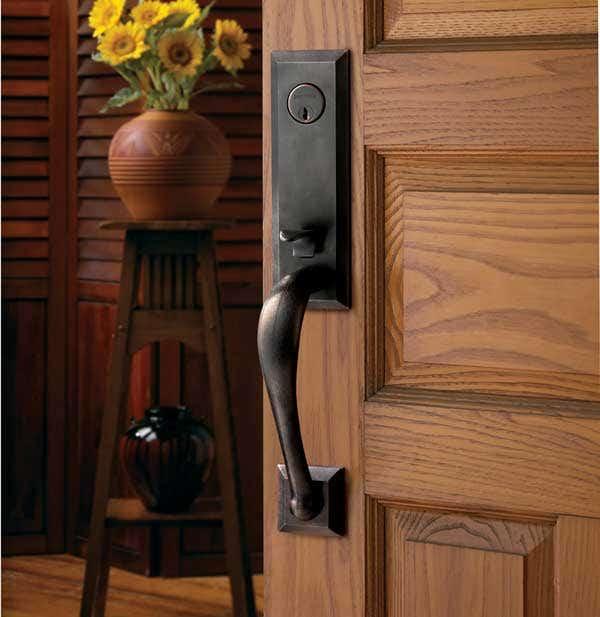
Doors Galore’s custom door options include personalization of wood, glass, color, shape, dimensions, and frame style. Hardware should support that composition rather than dictate an awkward last-minute change.
Compare operation and documented performance
Consider how household members will actually use the entry. Where possible, try the grip, lever, knob, or thumbpiece before choosing. Think about carrying groceries, opening the door with limited hand strength, and operating the interior lock.
Ease of operation is another consideration when choosing door hardware. The U.S. Access Board’s accessibility standards provide guidance on accessible door hardware in covered settings. Although those requirements do not automatically apply to every private residence, they offer useful context when discussing hardware that should be comfortable for different household members to operate.
Useful questions include:
- How does the door latch when it closes?
- Which action locks and unlocks it from each side?
- Does the interior operation suit everyone who regularly uses the door?
- What product-specific testing, ratings, and written terms are available?
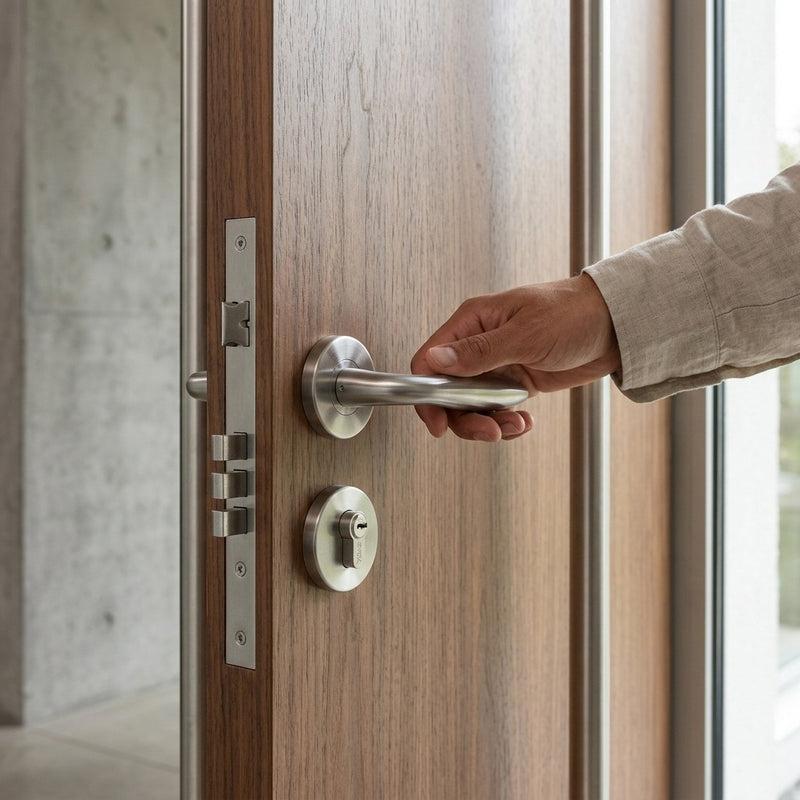
Do not treat “mortise” as an automatic security guarantee or “tubular” as an indication of inadequate security. Evaluate the specific lock, its installation, and the complete door-and-frame arrangement.
When comparing entry sets, look beyond the type of locking mechanism and review the specific product’s documented performance. The Builders Hardware Manufacturers Association (BHMA) develops standards for builders’ hardware and provides information about hardware certification. Ask which standards, grades, or certifications apply to the exact entry set you’re considering.
Likewise, neither hardware label establishes hurricane resistance, impact certification, or code compliance. Any such requirement needs appropriate documentation for the proposed assembly.
If electronic access matters, raise it early. Doors Galore lists electronic entry sets among its door hardware offerings, but compatibility with a particular door and locking system must be confirmed rather than assumed.
Which entry set should you choose?
A mortise set is worth considering when you prefer a particular mortise product’s trim, operation, or functions and the door can be prepared to its specifications. A tubular set is worth considering when its available styles and functions suit your needs and its preparation works with the door.
For a new custom front door, compare both before finalizing the design. For an existing entry, begin with the hardware already installed: changing systems may involve more than replacing the visible handles.
The strongest decision is a coordinated one: the hardware fits the door, complements the artwork or wood detailing, operates comfortably, and has the documentation your project requires.
Frequently asked questions
-
Can I switch from tubular hardware to a mortise entry set?
Possibly, but it is not automatically a direct swap. The door needs an appropriate lock pocket, and existing holes may require attention. Have the door and proposed hardware evaluated before purchasing.
-
Is a mortise entry set always more secure?
No category name establishes the security of the whole entry. Compare specific product documentation and consider the door, frame, strike, and installation together.
-
When should I choose hardware for a custom door?
Select it during design planning and confirm the exact model before the door is prepared. Hardware dimensions can affect placement near glass, panels, and carved details.
-
Does Doors Galore offer both types?
Yes. Its listed hardware offerings include mortise entry sets, tubular entry sets, keyed sideplates, and electronic entry sets. Confirm the available options and suitability for your project.
Bring the door and hardware plans together
For a productive project discussion, gather a photo or drawing of the entry, any existing hardware information, and examples of trim you like. Note your preferences for keyed or electronic access and any concerns about everyday operation.
Get a Free Quote from Doors Galore Co. to discuss your custom front door and hardware selection together.